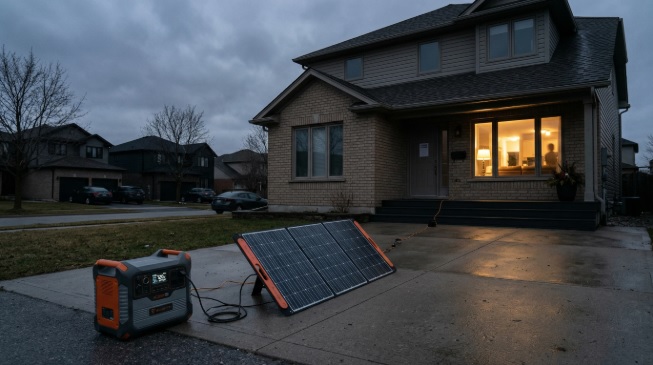
Reliable power has shifted from a convenience to a necessity. Whether you are facing severe weather power outages, planning an off-grid expedition, or seeking long-term energy independence, investing in a high-efficiency solar generator and battery backup system is one of the smartest decisions for modern households.
Unlike traditional gas-powered generators, solar generator systems produce zero emissions, operate in total silence, and require virtually no ongoing fuel costs. In this comprehensive guide, we review the top solar generators and home battery systems for 2026, evaluating their capacity, charging speeds, battery chemistry, and overall value.
Key Factors to Consider Before Buying a Solar Generator
Selecting the right energy backup system depends heavily on your daily power requirements. Here are the core specifications to analyze before making an investment:
- Battery Capacity (Watt-hours - Wh): Indicates how much total energy the station can store. A 1,000Wh battery can power a 100W appliance for roughly 8 to 9 hours.
- Inverter Output (Watts - W): Determines the maximum continuous power output. Ensure the running and surge wattage can support heavy appliances like refrigerators or medical devices.
- Battery Chemistry (LiFePO4 vs. NMC): Modern power stations use Lithium Iron Phosphate (LiFePO4) batteries, offering over 3,000 to 3,500 life cycles (10+ years of daily use) compared to older NMC lithium batteries.
- Solar Input Capacity (W): Higher solar input capacity allows faster recharge times using solar panels during limited sunlight hours.
Top Solar Generators for 2026: Comparison Overview
| Feature / Model | Best Overall Performance | Best for Heavy Home Backup | Best Budget & Portability |
|---|---|---|---|
| Battery Chemistry | LiFePO4 (LFP) | LiFePO4 (LFP) | LiFePO4 (LFP) |
| Capacity Range | 1,000Wh – 2,000Wh | 3,000Wh – 6,000Wh+ | 500Wh – 800Wh |
| Inverter AC Output | 1,800W – 2,400W | 3,000W – 5,000W | 600W – 1,000W |
| Solar Input Speed | Up to 800W | Up to 1,600W+ | Up to 200W |
| Ideal For | Essential Home Backup / RV | Full Home Power / Outages | Camping / Laptops / CPAP |
Detailed Reviews: The Best Solar Power Backup Solutions
1. Mid-Capacity Solar Stations: The Sweet Spot for Most Homes
For standard emergency preparedness, a power station in the 1,000Wh to 2,000Wh range delivers the optimal balance between portability and utility.
- Performance: Capable of running essential appliances including full-sized refrigerators, Wi-Fi routers, LED lighting, and medical equipment for up to 24–48 hours when paired with 400W–800W solar panels.
- Why It Wins: Incorporates ultra-fast AC charging (0 to 80% in under 60 minutes) alongside advanced MPPT (Maximum Power Point Tracking) charge controllers for maximum solar efficiency.
2. High-Capacity Whole-Home Battery Ecosystems
If your goal is total off-grid independence or surviving prolonged grid failures, expanded home battery ecosystems are required.
- Expandability: Modular systems allow users to daisy-chain additional expansion batteries, scaling capacity from 3kWh up to 15kWh or more.
- Integration: Can be directly tied into your home’s main breaker box via a Transfer Switch, automatically restoring power in milliseconds when the main grid fails.
3. Ultra-Portable Solar Generators for Mobile Energy
For light emergency power, remote work, or outdoor travel, compact power stations under 800Wh offer maximum versatility.
- Key Benefits: Lightweight construction (under 20 lbs), native USB-C Power Delivery ports for fast laptop charging, and pure sine wave AC outlets that safely power sensitive electronics.
How to Calculate Your Emergency Power Needs
To determine the ideal solar generator size for your backup setup, follow this simple formula:
- List essential devices: Identify the continuous wattage of appliances you plan to run simultaneously (e.g., Fridge = 150W, Router = 15W, LED Lights = 30W; Total = 195W).
- Determine required runtime: Multiply total watts by desired operating hours (e.g., 195W × 10 hours = 1,950Wh).
- Account for efficiency loss: Factor in an 15–20% inverter efficiency loss by multiplying the total Wh requirement by 1.2 (1,950Wh × 1.2 = 2,340Wh capacity needed).
Maximizing Solar Panel Efficiency in Off-Grid Setup
To get the fastest recharge speeds from your solar array:
- Angle Adjustment: Position panels perpendicularly to the sun’s rays, adjusting seasonal angles twice a year.
- Avoid Shading: Even partial shading on a single panel cell can significantly reduce the output of the entire solar string.
- Use MPPT Controllers: Ensure your generator features an integrated MPPT controller, which increases solar harvesting efficiency by up to 30% compared to older PWM technology.
Conclusion: Securing Your Energy Future
Investing in a modern solar generator and battery backup system guarantees peace of mind during unpredictable grid failures while lowering your carbon footprint. By selecting a LiFePO4-based system tailored to your specific household wattage needs, you secure a reliable, clean, and renewable power source for a decade to come.